
Modern homes are becoming smarter, more efficient, and increasingly connected. From controlling lights with a smartphone to monitoring security cameras from anywhere in the world, technology is transforming the way we interact with our living spaces. At the center of this transformation is the home automation system.
A home automation system allows homeowners to control and automate various household functions such as lighting, security, climate control, entertainment, and appliances through a centralized platform. Whether you’re looking for greater convenience, improved security, energy savings, or a more comfortable lifestyle, home automation offers solutions that can significantly enhance everyday living.
In this comprehensive guide, we will explore everything you need to know about home automation systems, how they work, their benefits, components, costs, and future trends shaping smart homes.
What Is a Home Automation System?
A home automation system is a network of interconnected devices that communicate with each other and can be controlled remotely or automatically through software, mobile applications, voice commands, or programmed schedules.
These systems integrate various technologies to create a smart home environment where devices can operate independently based on predefined conditions or user preferences.
For example:
- Lights automatically turn on when someone enters a room.
- Air conditioning adjusts based on room temperature.
- Security cameras send alerts when motion is detected.
- Curtains open automatically at sunrise.
- Smart locks can be controlled remotely.
Instead of manually operating each device, homeowners can manage multiple functions from a single interface.
How Does a Home Automation System Work?
A home automation system typically consists of four key elements:
1. Smart Devices
These are the connected products installed throughout the home, such as:
- Smart lights
- Smart thermostats
- Security cameras
- Smart locks
- Smart switches
- Smart curtains
- Smart appliances
2. Sensors
Sensors collect environmental data and trigger automated actions.
Common sensors include:
- Motion sensors
- Door and window sensors
- Temperature sensors
- Humidity sensors
- Water leak sensors
- Smoke detectors
3. Controller or Hub
The hub acts as the brain of the system, enabling communication between connected devices.
Examples include:
- Dedicated smart home hubs
- Mobile applications
- Smart panels
- Voice assistants
4. Connectivity Network
Devices communicate using:
- Wi-Fi
- Bluetooth
- Zigbee
- Z-Wave
- Matter
- Thread
These protocols ensure seamless communication among devices.
Key Features of a Home Automation System
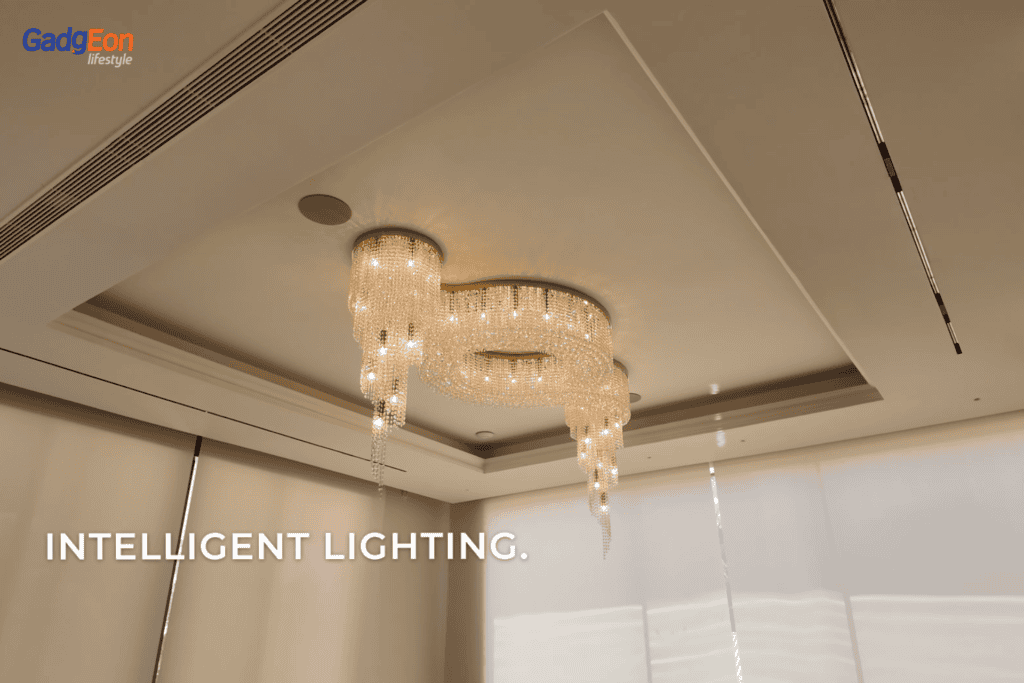
Smart Lighting Control
Lighting automation allows users to:
- Control lights remotely
- Create schedules
- Adjust brightness levels
- Change colors
- Reduce energy consumption
Smart lighting can automatically switch off when rooms are unoccupied.
Climate Control
Smart thermostats and HVAC systems help maintain optimal temperatures while improving energy efficiency.
Features include:
- Automated temperature adjustment
- Room-specific climate control
- Remote operation
- Energy usage tracking
Smart Security Systems
Security is one of the primary reasons homeowners invest in home automation.
Features include:
- Smart door locks
- Video doorbells
- Surveillance cameras
- Motion detection
- Intrusion alerts
- Remote monitoring
Homeowners can receive real-time notifications on their smartphones.
Automated Curtains and Blinds
Motorized curtains can be programmed to:
- Open at sunrise
- Close at sunset
- Operate remotely
- Improve privacy
- Enhance energy efficiency
Entertainment Control
Smart homes can integrate:
- Audio systems
- Home theaters
- Televisions
- Streaming devices
Users can control multiple entertainment systems from a single interface.
Smart Appliance Management
Connected appliances include:
- Refrigerators
- Washing machines
- Ovens
- Coffee makers
- Dishwashers
Automation enables efficient operation and remote monitoring.
Benefits of Installing a Home Automation System
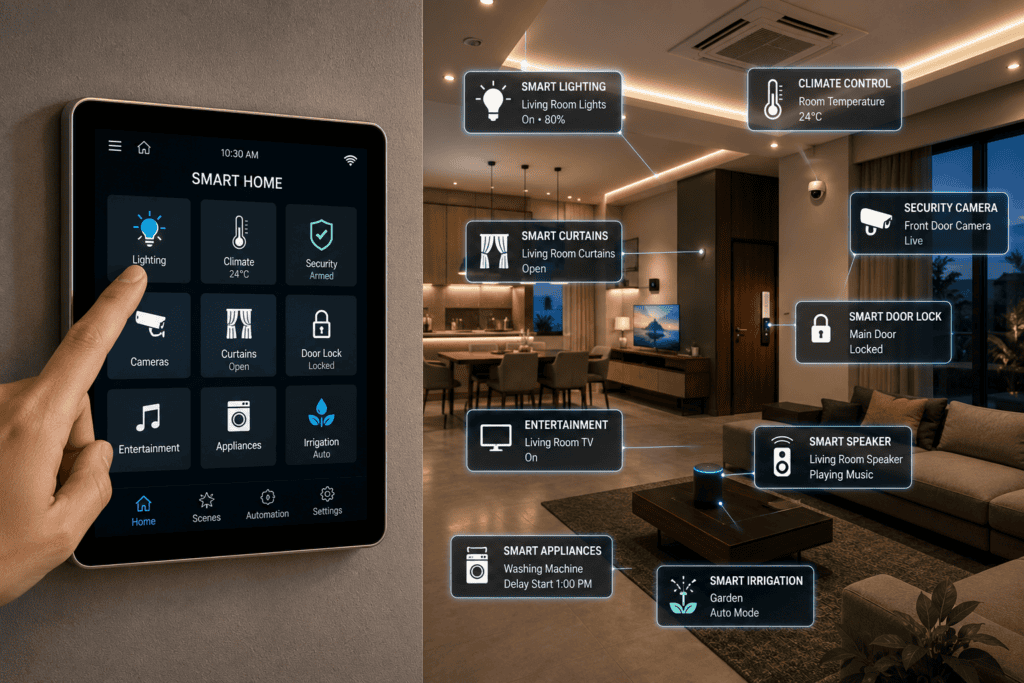
Enhanced Convenience
One of the biggest advantages is convenience.
Instead of controlling each device individually, users can manage their entire home from:
- Smartphones
- Tablets
- Smart panels
- Voice assistants
Daily routines become effortless through automation.
Improved Security
Smart security features provide:
- Real-time monitoring
- Instant alerts
- Remote access control
- Video verification
Homeowners can stay informed even when away from home.
Energy Efficiency
A home automation system helps reduce energy waste through:
- Automated lighting schedules
- Smart climate control
- Occupancy-based automation
- Energy monitoring tools
This can lead to significant reductions in utility bills.
Increased Comfort
Automation creates personalized living experiences by adjusting:
- Lighting
- Temperature
- Entertainment settings
- Curtains
Based on user preferences.
Remote Accessibility
Users can control their homes from virtually anywhere with internet access.
Examples include:
- Locking doors remotely
- Checking camera feeds
- Turning off forgotten appliances
- Adjusting room temperatures
Property Value Enhancement
Smart homes are increasingly attractive to buyers and can enhance property value in competitive real estate markets.
Types of Home Automation Systems
Wired Home Automation Systems
Wired systems use physical cables for communication.
Advantages
- Highly reliable
- Stable connectivity
- Suitable for large homes
- Minimal signal interference
Limitations
- Higher installation costs
- Best suited during construction
Wireless Home Automation Systems
Wireless systems communicate through Wi-Fi, Zigbee, Bluetooth, or similar technologies.
Advantages
- Easier installation
- Lower upfront cost
- Flexible expansion
Limitations
- Potential signal interference
- Dependence on network stability
Hybrid Systems
Hybrid systems combine wired and wireless technologies for maximum flexibility and reliability.
Many luxury smart homes utilize hybrid solutions.
Popular Devices in a Home Automation System
A typical smart home may include:
- Smart switches
- Smart dimmers
- Smart plugs
- Smart thermostats
- Security cameras
- Video doorbells
- Smart locks
- Smart speakers
- Motorized curtains
- Smart sensors
- Smart irrigation systems
- Smart smoke detectors
These devices work together to create a fully connected environment.
Voice-Controlled Home Automation
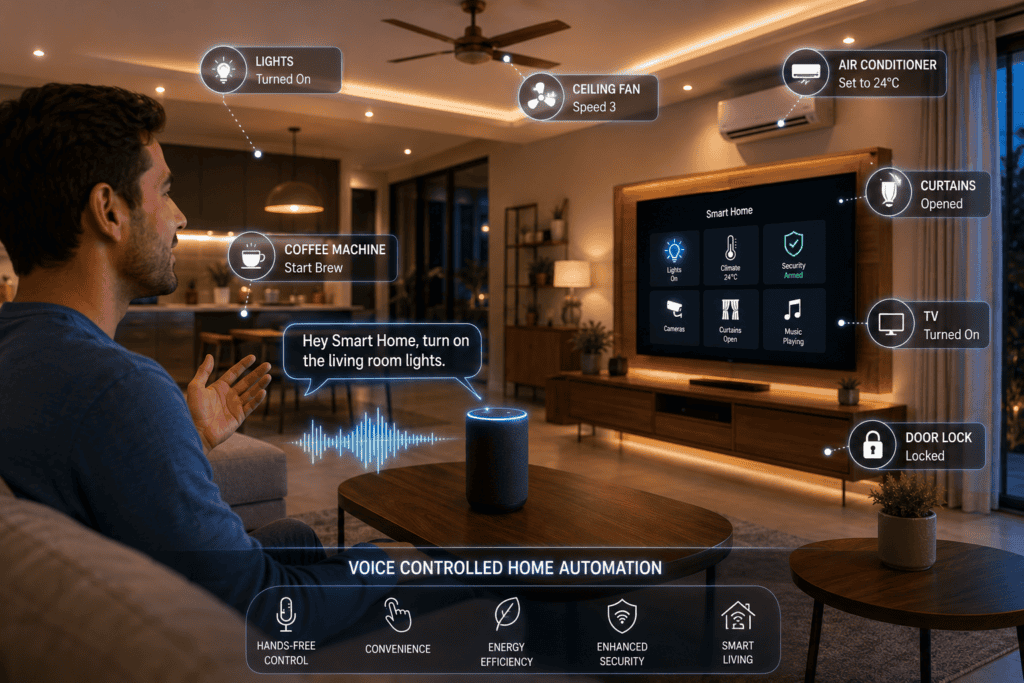
Voice assistants have become a major part of smart home ecosystems.
Users can control devices using simple voice commands such as:
- Turn on the living room lights
- Lock the front door
- Set temperature to 22°C
- Open the curtains
Voice control adds hands-free convenience and accessibility.
Home Automation System and Energy Management
Energy management is one of the most valuable applications of home automation.
Features include:
- Real-time energy monitoring
- Automated lighting schedules
- Smart HVAC optimization
- Solar energy integration
- Appliance energy tracking
These capabilities help homeowners reduce their carbon footprint while lowering energy costs.
Security Considerations for Home Automation Systems
As homes become more connected, cybersecurity becomes increasingly important.
Best practices include:
- Strong passwords
- Multi-factor authentication
- Regular software updates
- Secure Wi-Fi networks
- Trusted device manufacturers
A properly secured system minimizes risks and protects user data.
How Much Does a Home Automation System Cost?
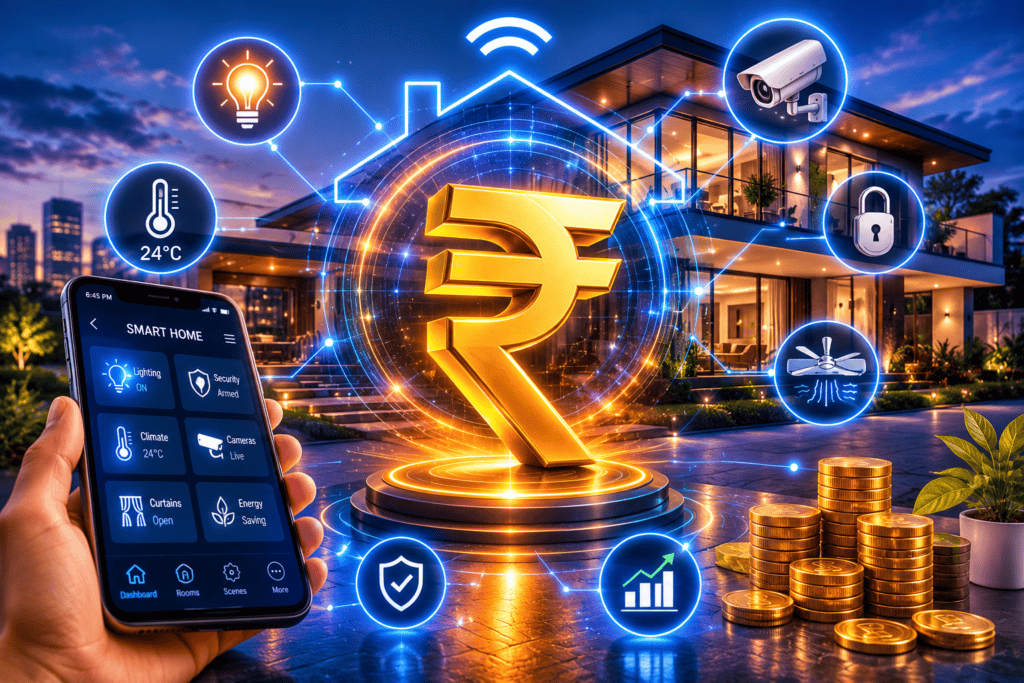
The cost of a home automation system depends on several factors:
- Property size
- Number of devices
- Wired vs wireless infrastructure
- Customization requirements
- Integration complexity
Entry-Level Systems
Basic smart lighting and security setups can be relatively affordable.
Mid-Range Systems
Comprehensive lighting, climate, and security integration typically require a larger investment.
Luxury Smart Homes
Premium installations with advanced automation, multi-room control, home theaters, and custom interfaces represent the highest investment category.
The final cost varies based on project scope and homeowner requirements.
Future Trends in Home Automation Systems
The smart home industry continues to evolve rapidly.
Key trends include:
Artificial Intelligence Integration
AI-powered systems learn user habits and automatically optimize home settings.
Predictive Automation
Systems anticipate user needs based on behaviour patterns.
Matter Standard Adoption
The Matter protocol improves compatibility between devices from different manufacturers.
Enhanced Energy Management
Smart homes will increasingly integrate renewable energy systems and battery storage solutions.
Advanced Security Features
Future systems will utilize:
- Facial recognition
- Behavioral analytics
- Intelligent threat detection
Choosing the Right Home Automation System
When selecting a home automation solution, consider:
- Scalability
- Device compatibility
- Ease of use
- Security features
- Professional support
- Budget
- Future expansion needs
A well-designed system should be flexible enough to grow with your lifestyle.
Frequently Asked Questions About Home Automation Systems
Is a home automation system worth it?
Yes. Home automation offers convenience, security, energy savings, and improved comfort while enhancing the overall living experience.
Can I automate an existing home?
Absolutely. Many wireless smart home solutions can be added to existing homes without major renovations.
Does home automation require internet access?
Many functions work locally, but remote access and cloud-based features typically require an internet connection.
Are home automation systems secure?
Modern systems can be highly secure when properly configured with strong passwords, regular updates, and secure networks.
Can I control my home with my smartphone?
Yes. Most modern home automation systems provide dedicated mobile applications for complete control and monitoring.
Conclusion
A home automation system is transforming modern living by bringing together convenience, security, energy efficiency, and intelligent control into a single connected ecosystem. Whether you’re automating a few lights or creating a fully integrated smart home, the benefits extend far beyond convenience.
As technology continues to evolve, home automation systems will become even more intelligent, personalized, and accessible. Investing in smart home technology today not only improves daily life but also prepares your home for the future of connected living.
For homeowners seeking comfort, efficiency, and complete control over their environment, a home automation system is no longer a luxury-it is quickly becoming a standard feature of modern homes.
Want to automate your home. Whatsapp Us!